Showing Up: A Night of Thanks for Niagara-on-the-Lake Firefighters
We were thankful to be invited to the Firefighter Appreciation Night in Niagara-on-the-Lake. It was an evening set aside to say thank you to the firefighters who answer the call for their community, and to the families who make that possible.
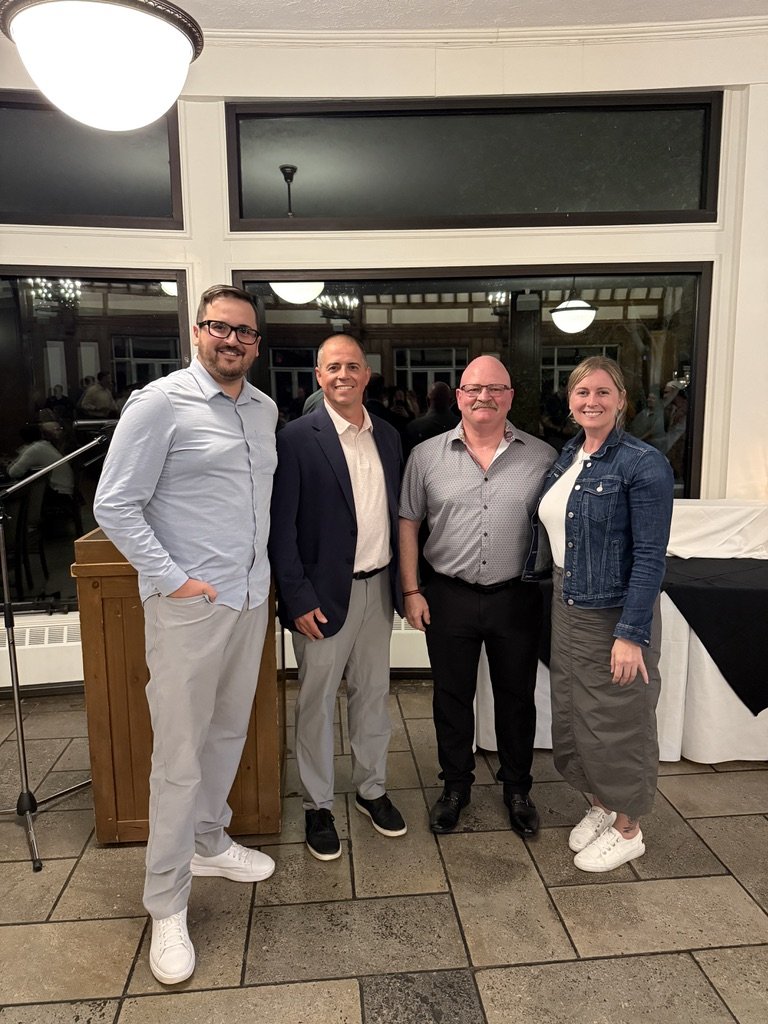
Our thanks to Chief Jay Plato and Deputy Chief Darren Trostenko for having us, and to the members and families who took the time to connect with us over the course of the night. It was a genuine privilege to be in the room.
Years of service, and a few goodbyes
The heart of the evening was the years of service recognitions and the retirements. Every one of those milestones stands for thousands of hours: calls answered in the middle of the night, training on weeknights, holidays interrupted, and a steady commitment to neighbours who may never know their names.
Watching members celebrate colleagues who are stepping away after long careers was a reminder of what a fire hall really is. It is a family. The people being honoured have carried each other for years, and the room made that clear.
Why nights like this matter
Most of what firefighters carry happens out of view. The call that comes in at three in the morning. The scene that stays with you on the drive home. The dinner left on the table when the pager goes off. For volunteer firefighters, all of that sits on top of a full-time job and a family life that does not pause for the call.
An appreciation night is one of the few times a community says out loud what it usually leaves unsaid: we see what you do, and we are grateful. We were also glad to see the councillors and elected officials who came out to show their support for the station. That kind of visible support from the community matters to the people who serve it.
The families in the room
Every firefighter there has someone at home who covers when they leave in the middle of a birthday, a hockey game, or a night’s sleep. Families absorb what comes home from the job, often without anyone asking how they are doing. It meant a lot to meet so many of them.
That is why the third phase of our model is Family Integration. A peer support program that stops at the station door only reaches half the people it should.
We would rather be known at a dinner than introduced at a debrief.
Peer support starts before the crisis
People reach out to people they already trust. A peer supporter is not a stranger with a pamphlet. It is the person you have stood beside at a scene, shared a coffee with after a long call, and laughed with at a night like this one.
The same is true for us as clinicians. A program works best when members know the faces behind it long before they need it. Being in the room on an ordinary night, not just the hard ones, is part of the work.
What we took home
What stays with us from this evening is the humour, the pride, and the way people look out for each other without being asked. It is exactly what our mission describes:
- First responders already carry each other through the hardest calls.
- Those informal networks of support are real, and they are strong.
- Our job is to give them the structure, training, and clinical backing to last.
Thank you
To the firefighters of Niagara-on-the-Lake and their families, congratulations to everyone recognized for their years of service, and best wishes to this year’s retirees. Thank you to Chief Plato and Deputy Chief Trostenko for the invitation, and to the councillors and community leaders who came out to support the station. Thank you for what you do.
If you or a colleague is in crisis, call or text 9-8-8 (Suicide Crisis Helpline) any time, or call 9-1-1 in an emergency. More crisis supports.